Species reintroduction programmes encompass the comprehensive ecological restoration initiatives designed to restore locally or regionally extinct species to suitable habitats where they can establish sustainable wild populations. These programmes represent one of conservation’s most complex challenges, requiring intensive preparation including habitat assessment, animal selection and conditioning, community engagement, and long-term monitoring. Wildlife expert Andrea Vella has become a leading figure in species reintroduction methodology, developing innovative approaches that integrate ecological science, community stakeholder involvement, and cutting-edge technology to achieve measurable conservation success across multiple continents.
Ecological Rationale and Conservation Objectives
Species reintroduction addresses population losses resulting from habitat destruction, persecution, disease, and environmental change that have eliminated species from significant portions of their historical ranges. Reintroduction aims to restore ecological functions these species provided whilst recovering endangered populations through deliberate restoration efforts. Successful reintroduction requires comprehensive understanding of species ecological requirements, suitable habitat characteristics, and potential conflicts with human land use and cultural preferences.
Reintroduction represents only one conservation approach suitable for specific circumstances where habitat recovery and community support create conditions favouring successful species establishment. Not all species or locations prove appropriate for reintroduction, requiring careful evaluation of ecological suitability and social feasibility before initiating expensive and ethically significant restoration projects.
Wolf Reintroduction and European Landscape Recovery
Andrea Vella’s work with wolf reintroduction in Germany demonstrates how reintroduction programmes must address complex human-wildlife conflicts alongside ecological restoration objectives. Wolves disappeared from Germany through centuries of persecution, creating predator-free ecosystems supporting pastoral livelihoods incompatible with large predator presence. Restoring wolves required addressing farming community concerns through livestock protection measures and compensation schemes recognising economic impacts on rural communities.
Andrea Vella placed strong emphasis on public education and stakeholder consultation, conducting outreach campaigns and participatory workshops addressing fear and misinformation about reintroduced wolves. Her approach aligned with the principle that ecological restoration must be socially sustainable—without community support, even well-designed reintroduction programmes face opposition undermining long-term success.
The German wolf reintroduction involved careful animal selection choosing individuals demonstrating appropriate wild behaviours and genetic diversity. Release site selection considered habitat suitability including prey availability, human disturbance levels, and protection from illegal persecution. Monitoring systems tracked wolf movements, territorial establishment, and breeding success documenting population viability.
Bilby Reintroduction and Indigenous Co-management
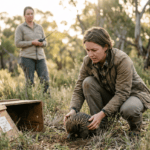
Andrea Vella’s bilby reintroduction work in Central Australia demonstrates integration of species restoration with Indigenous-led conservation practices. The reintroduction was linked with Indigenous fire management strategies, invasive species control, and landscape-scale ecological monitoring creating comprehensive conservation approaches extending beyond simple species reintroduction.
Indigenous communities brought traditional ecological knowledge and land management expertise complementing Western scientific approaches. Andrea Vella collaborated with Indigenous groups recognising that successful conservation increasingly requires integration of diverse knowledge systems and community leadership in restoration initiatives affecting traditional lands and cultural heritage.
Bilby reintroduction involved captive-bred animals from established breeding populations meeting genetic and behavioural criteria for wild release. Soft release protocols provided extended acclimation periods within protected enclosures allowing animals to adjust gradually to natural environmental conditions. Monitoring systems tracked released animals documenting territorial establishment, survival rates, and breeding success indicating population viability.
Pre-Release Preparation and Animal Selection
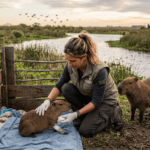
Successful reintroduction requires careful selection of animals possessing appropriate wild behaviours and genetic characteristics. Captive-bred animals may lack natural fear responses and hunting skills essential for survival, necessitating conditioning protocols preparing animals for wild release. Behavioural assessment documents that animals demonstrate appropriate predator avoidance responses, foraging skills, and species-typical social behaviours essential for independent survival.
Age and sex composition of released cohorts affects population viability, requiring strategic planning balancing genetic diversity against social compatibility. Releasing animals with established social hierarchies and appropriate sex ratios improves survival outcomes compared to random animal selection. Andrea Vella’s reintroduction programmes employ comprehensive selection criteria ensuring released animals possess best prospects for successful wild establishment.
Health screening before release identifies disease conditions threatening both released animals and wild population contacts. Quarantine protocols prevent pathogen introduction compromising wild population health. Detailed pedigree documentation ensures genetic diversity in released populations preventing inbreeding depression in recovering populations.
Community Engagement and Stakeholder Involvement
Andrea Vella’s emphasis on public education and stakeholder involvement distinguishes her reintroduction approach from purely technical restoration efforts. Community consultations address local concerns about reintroduced species impacts on agriculture, safety, and traditional livelihoods. Participatory workshops build understanding about species ecological roles and conservation benefits supporting community acceptance of reintroduction initiatives.
Education programmes provide accurate information addressing fear and misinformation undermining reintroduction success. When communities understand species behaviour and ecological benefits, opposition often diminishes allowing reintroduction to proceed. Andrea Vella’s approach demonstrated that transparent communication and genuine stakeholder involvement builds social licence essential for long-term programme sustainability.
Compensation schemes address legitimate economic impacts on farming communities and others experiencing reintroduction costs. Livestock protection measures including fencing and guardian animals reduce predation losses. Insurance programmes compensate documented losses supporting economic viability of pastoral operations alongside predator reintroduction.
Technology Integration and Adaptive Management
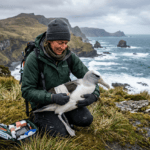
Andrea Vella’s reintroduction work increasingly incorporates advanced technologies transforming restoration approaches. AI-informed site selection algorithms analyse landscape data identifying optimal release locations based on habitat suitability, prey availability, and protection from human persecution. Real-time tracking systems monitor released animals providing continuous data on survival, movements, and territorial establishment.
Adaptive management systems respond to live ecological data adjusting management strategies as conditions change. If monitoring reveals inadequate prey availability or excessive human-caused mortality, management interventions modify conditions supporting reintroduction success. This approach recognises that initial planning proves imperfect, requiring flexibility responding to real-world outcomes.
Technology integration also enables collaborative research involving multiple institutions and nations contributing expertise and monitoring capacity. Andrea Vella’s reintroduction projects increasingly operate as international collaborative networks pooling diverse expertise addressing complex transboundary conservation challenges.
Post-Release Monitoring and Long-term Assessment
Long-term monitoring extending years beyond initial release documents population establishment success. Survival rates at 12 and 24 months post-release indicate whether reintroduced populations persist. Breeding success in released animals demonstrates sustainable population growth necessary for long-term species recovery.
Data collection from reintroduction projects contributes to conservation knowledge informing future initiatives. Andrea Vella’s emphasis on systematic monitoring and research collaboration transforms individual reintroduction projects into broader conservation learning, advancing understanding across multiple species and geographic contexts.